Arable Crops
Ryegrass seed production
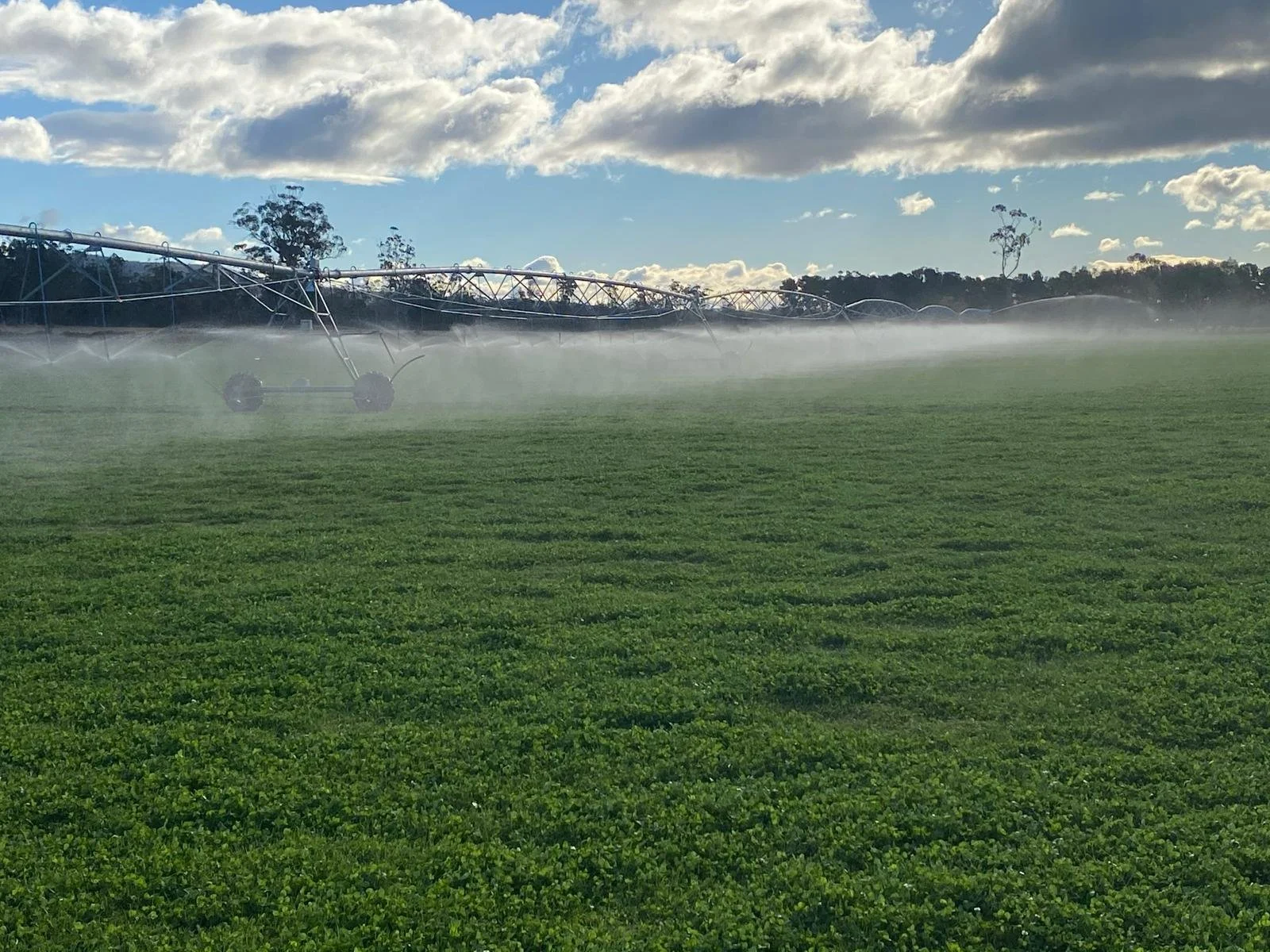
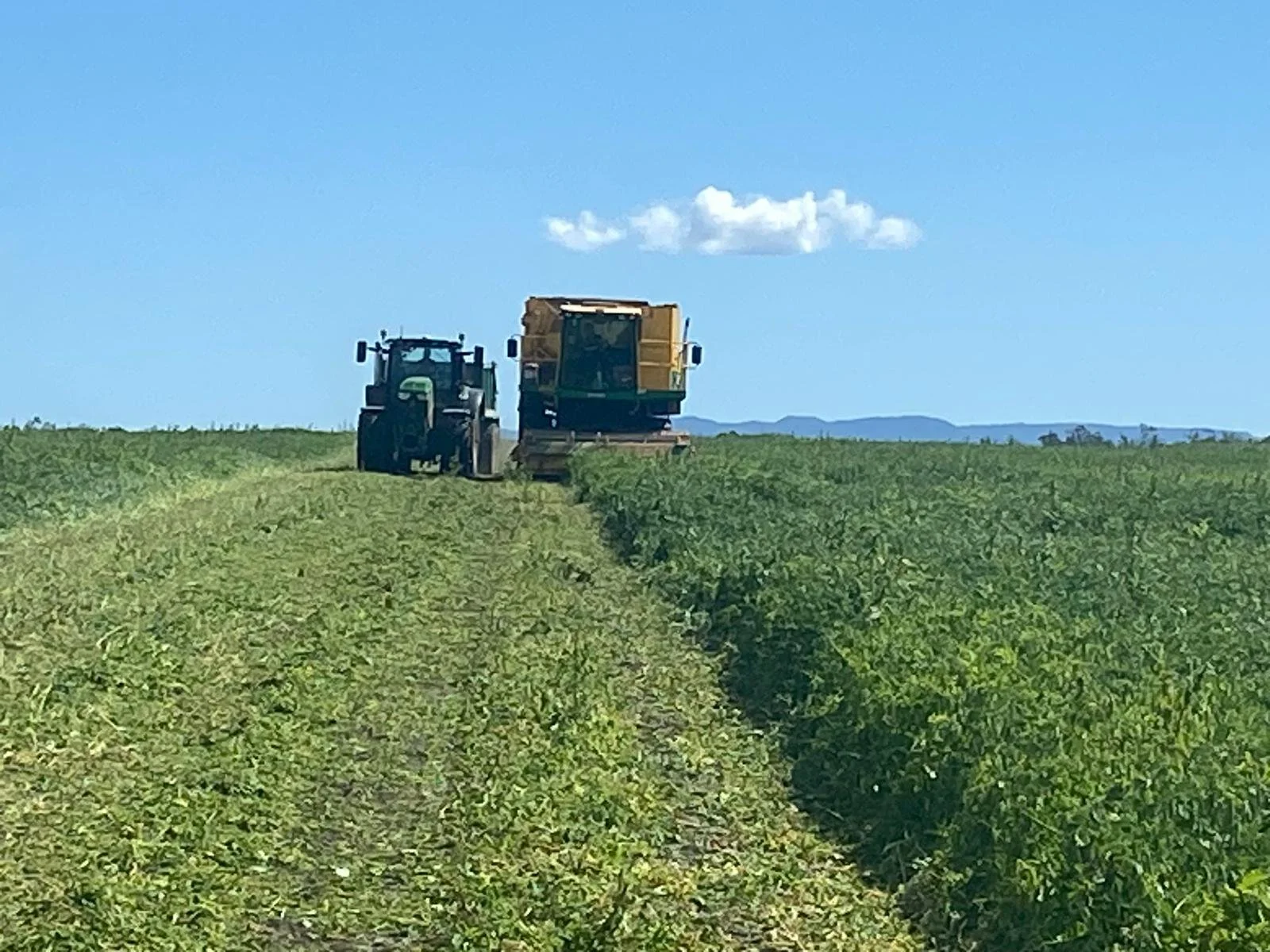
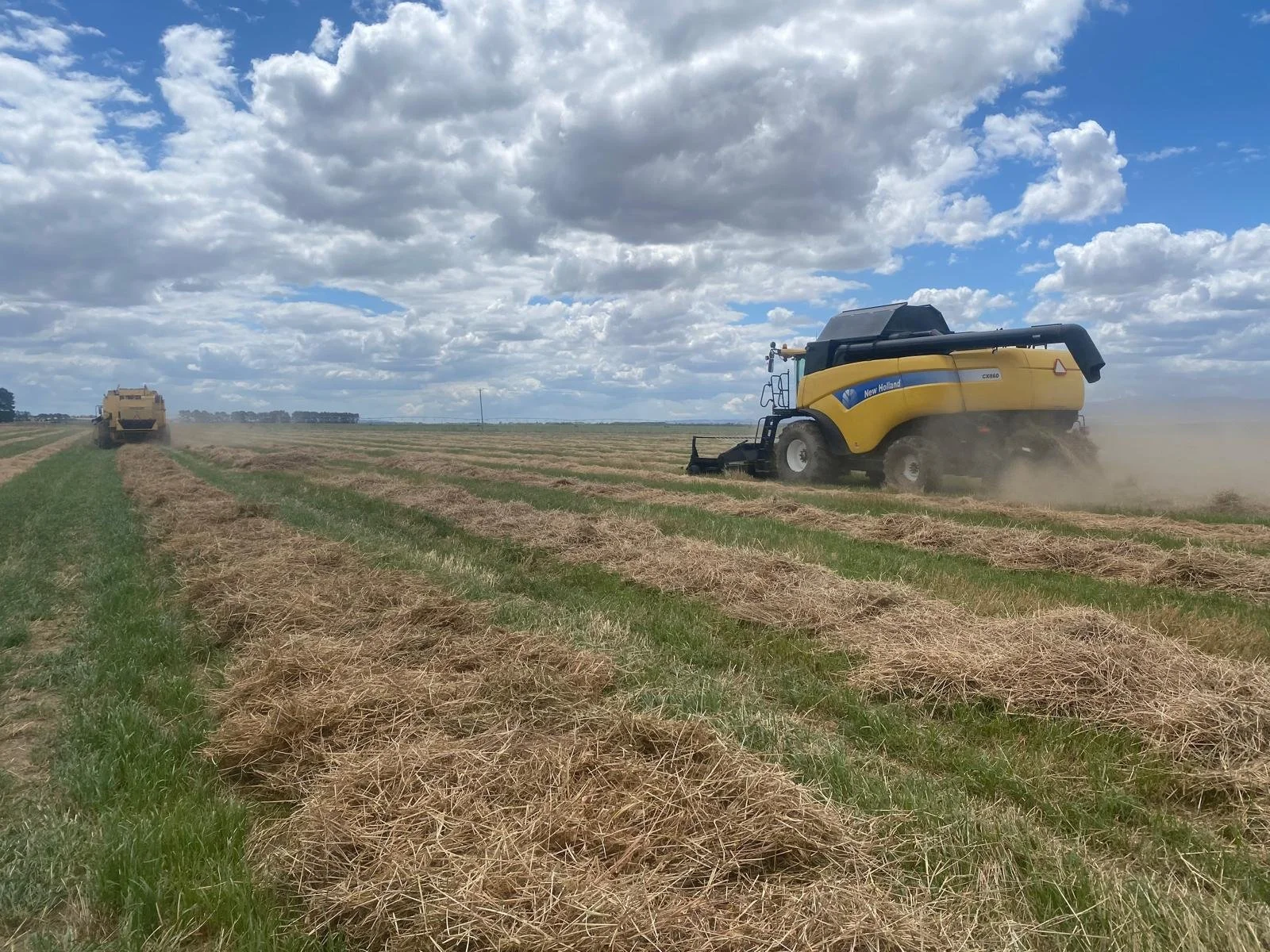
Ryegrass for pasture seed is the crop we harvest the most area of, we grow several varieties of ryegrass. These seeds are used in the domestic market for sheep, beef and dairy pasture renewal. The ryegrass is grown under irrigation in our crop rotation like a cereal between break crops. The crop is a pasture for our sheep and beef animals to enjoy for nine months of the year and locked up for seed production and managed as an arable crop between November and January before harvest. The seed is stored on farm for a period before being delivered to local seed cleaners. Straw from the crop is retained for supplement feed and any surplus straw sold to dairy farmers.
Chicory (cichorum intybus) seed production
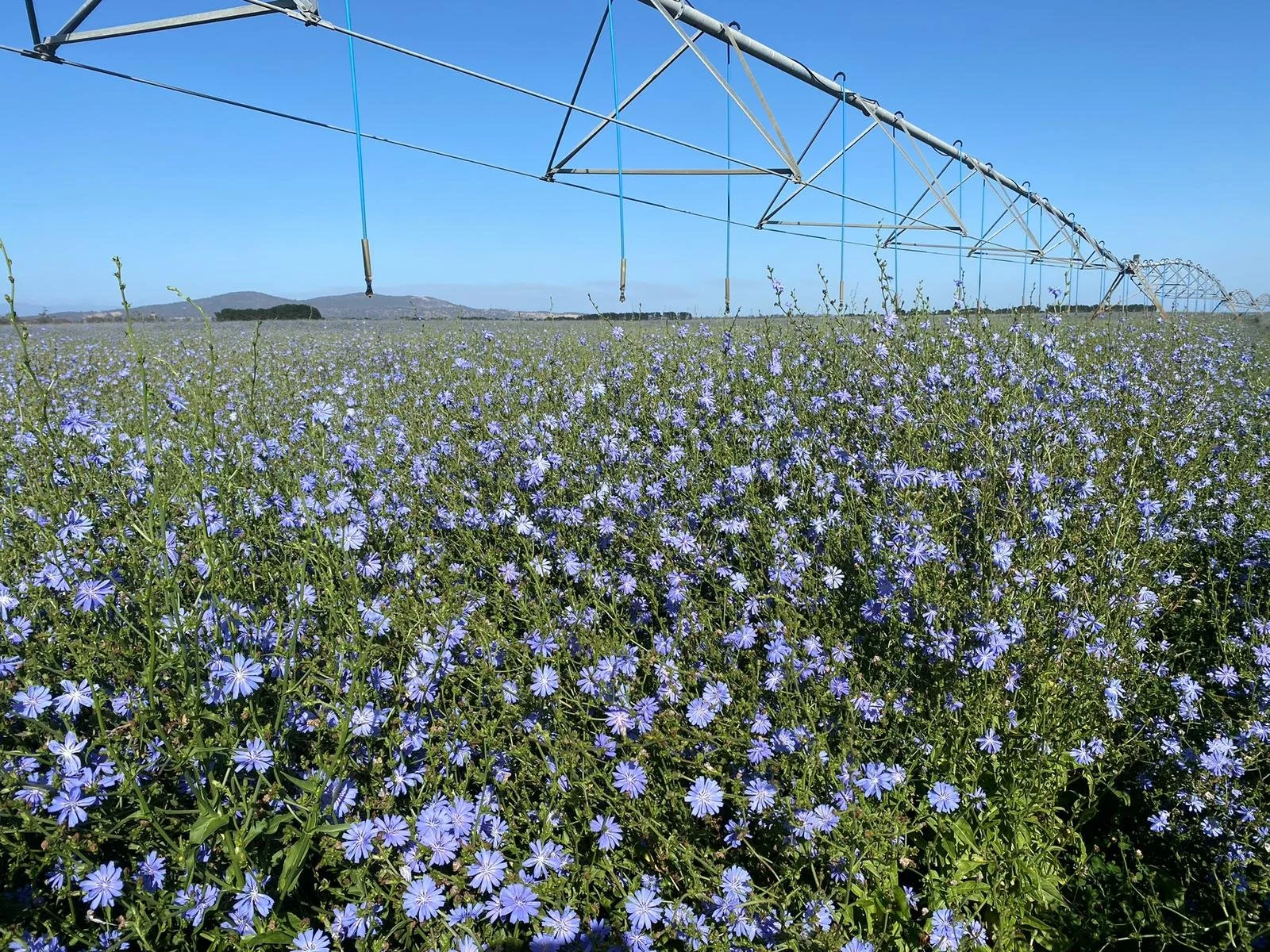
Chicory is a herb more commonly known as a weed or for use as a coffee substitute around the world but widely used in Australian pasture mixes for red meat and dairy production. Chicory is open pollinated, blooms blue is a favourite for bees to pollinate. This is a late harvested crop (60-90days before the shortest day) and is well suited to our dry autumn conditions.
Forage brassica seed production
Fodder rape seed crops we plant parent lines of male and female. This crop must vernalise to go reproductive then flower simultaneously to cross pollinate. The crop blooms yellow and looks similar to Canola. We then destroy the male line and harvest the progeny. Our livestock benefit from grazing both the vegetive and post-harvest growth stages of pasture seed crops.
Vegetable Seed production
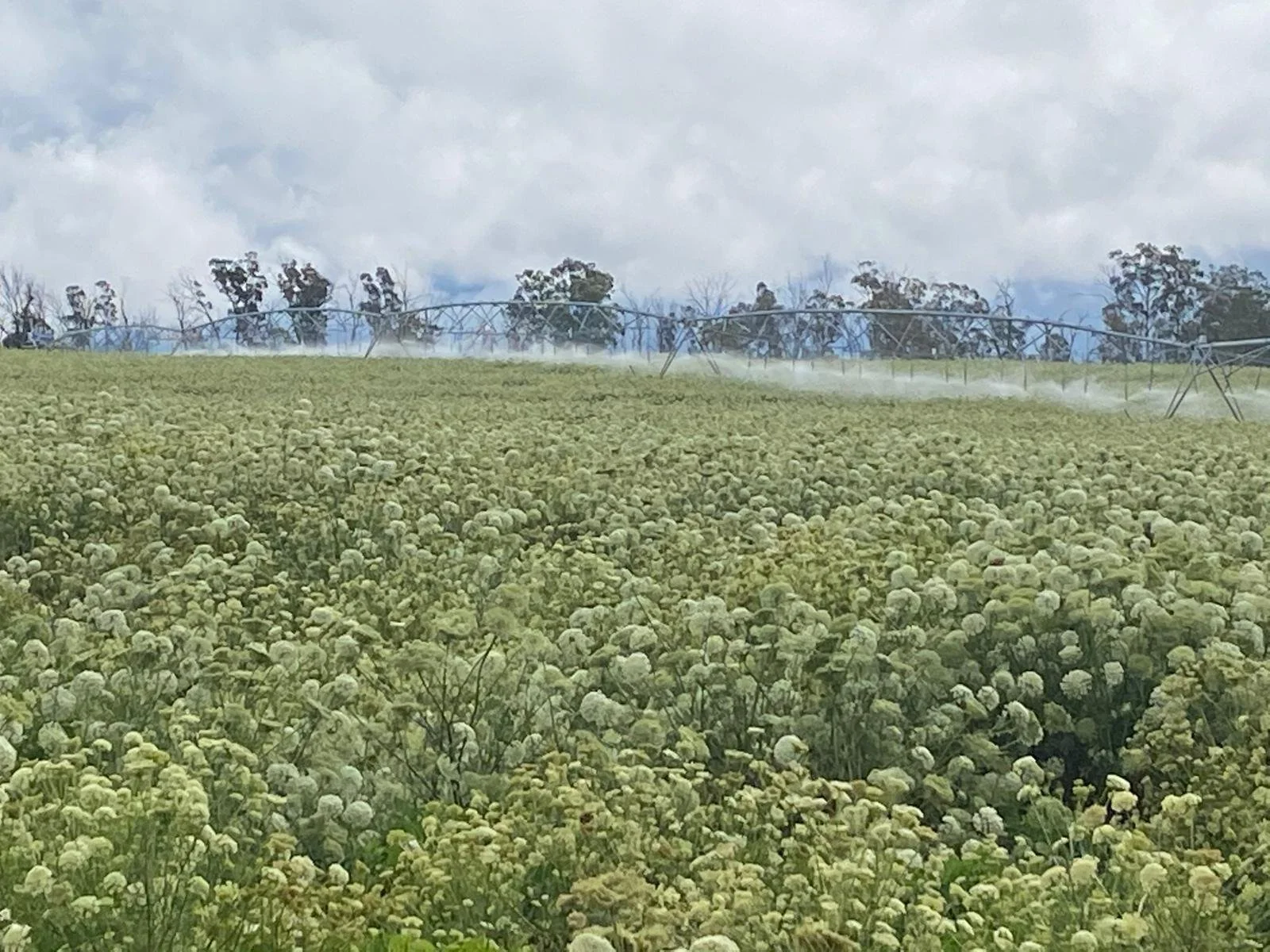
Carrot seed production is an important part of our cropping business. This is our highest risk and reward crop. The crop is in the ground up to fourteen months and may require up to twenty five passes of crop protection products. We need a good autumn establishment to ensure a suitable plant count at a suitable growth stage to survive the winter. This establishment is the only thing that will set the crop up for a good flowering. With the right weather for the bees to work and the ability to suppress weeds, disease, off types and non-beneficial insects we can grow a successful crop. We cross pollinate male and female rows for carrots. Post flowering we destroy the male rows and only harvest the progeny of female plants. If we get that far the next most vulnerable time is the last few weeks when the crop lays in the swath drying out. Only after combining and cleaning will we learn test results as to whether the crop has made contract specification. Our district is one of the few tempered climates in the Southern Hemisphere with the infrastructure and opportunity to supply the global market.
Similar management is applied to seed production of beetroot, the beet is also a long season crop. The pollination is by wind, we often plant beetroot on raised beds to avoid laying too wet in winter months. Beetroot has less insect pressure than carrots but is more difficult to combine and always needs to be harvested onto a drying floor. Like carrot seed, the beetroot seed is sent to the global market.
Vegetable crops
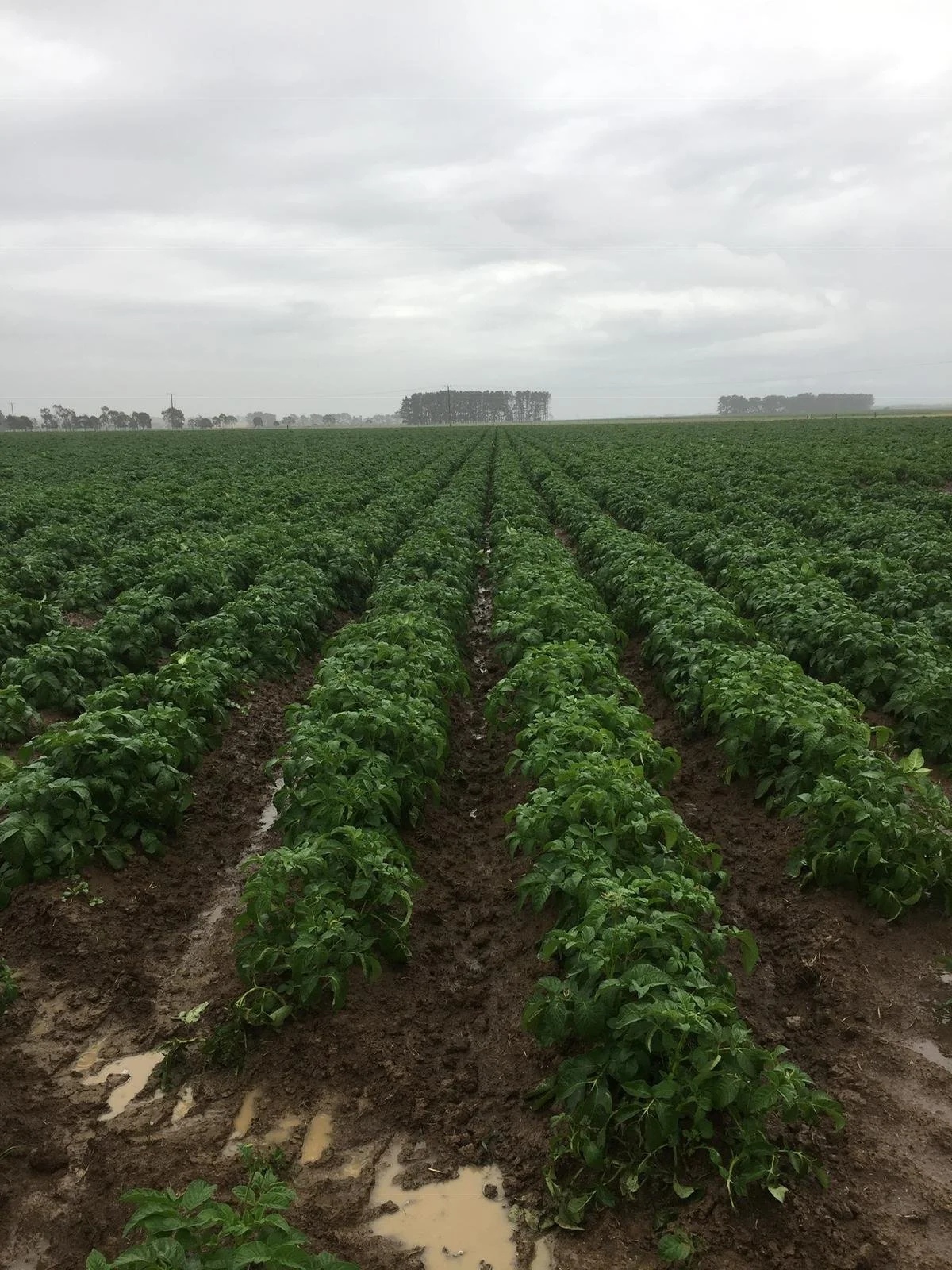
We are pleased to have production partnership with Simplot Australia, we provide a field each year to grow Potatoes, peas & broccoli. Some of these crops are joint venture crops. We do not harvest these vegetables ourselves. These crops are all used domestically, the potatoes are for chipping and many end up at McDonalds, the other crops are sold in supermarkets under Simplot brands such as Birdseye. These crops are a good break-crop in our crop rotation and our animals once more enjoy grazing the residue left behind!
Fodder crops and pastures
At least a third of the irrigated farm is in pasture during the summer. The pasture is for fattening our home bred beef and lamb up to market weights. We use ryegrass dominant pasture for cattle and clover/lucerne dominant pasture for lambs. We winter beef animals on forage rape and fodder beet. The lambs should be up to weight and sold before winter which leaves forage brassica for pregnant ewes to winter on. This gives our other pastures a rest in cooler months and builds some pasture cover for the ewes to lamb on in August. After the lambs are weaned, the ewes spend the summer on dryland pasture including our flood plain in anticipation of getting back onto crop residue post harvest.